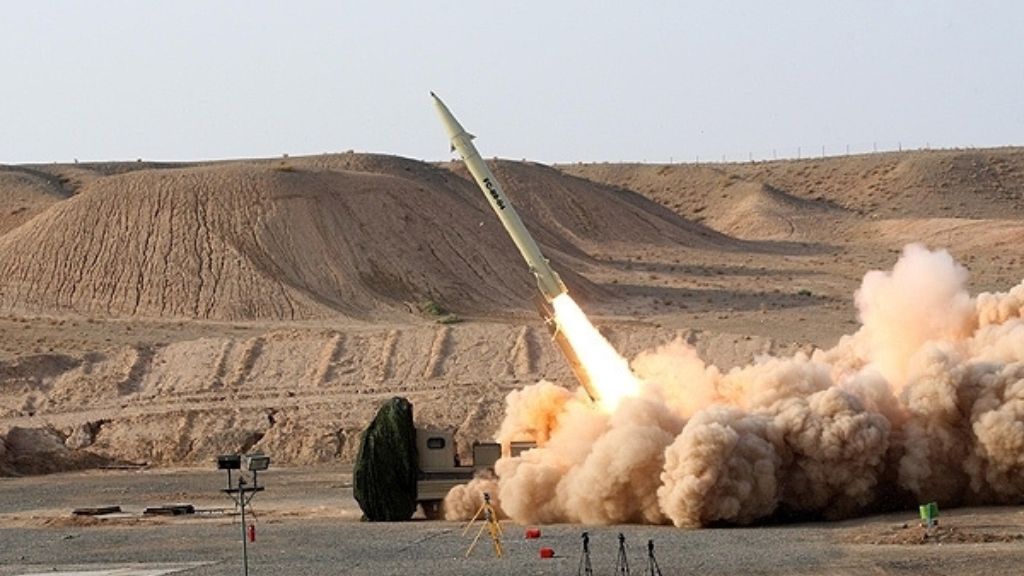
Iran's Red Line: Missile Defense Not on the Negotiation Table
In the complex tapestry of Middle Eastern diplomacy, few issues are as contentious or as pivotal as Iran's nuclear ambitions and its missile program. At the heart of Iran’s engagement with global powers stands its chief diplomat, Abbas Araghchi, a figure whose pronouncements often distill Tehran’s strategic calculus. While Iran has repeatedly signaled its willingness to re-engage in nuclear negotiations – provided they are conducted with mutual respect and without undue pressure – a critical aspect of its national security remains unequivocally off-limits for discussion: its missile defense capabilities. This firm stance, consistently articulated by Araghchi and other Iranian officials, marks a clear red line in any potential dialogue, shaping the very parameters of future diplomatic endeavors.
The concept of irakchi verhandlungen, or more accurately, the negotiations led by figures like Abbas Araghchi, are often seen as barometers of Iran's broader foreign policy objectives. While the international community, particularly Western powers, has consistently sought to curb Tehran's ballistic missile program alongside its nuclear activities, Iran views these defense systems as non-negotiable pillars of its sovereignty and regional deterrence. This article delves into the foundations of Iran's resolute position, exploring the reasons behind this unyielding stance and its profound implications for international relations.
The Unwavering Stance: Missile Defense as a Sovereign Right
For Iran, the development and maintenance of its missile defense systems are not bargaining chips but fundamental components of its national security doctrine. As former Iranian Foreign Minister Abbas Araghchi emphatically stated, "Defense strategies and missile systems would never be subject to negotiations." This declaration directly pushed back against demands from figures like former US President Donald Trump, who frequently called for Iran to limit the range of its ballistic missiles and cease uranium enrichment. Araghchi's clear message underscored that Iran would not only preserve its defense capabilities but would also expand them if necessary.
This unwavering position is rooted in a deeply held perception of regional threats and historical vulnerabilities. Surrounded by various geopolitical flashpoints and often feeling isolated on the international stage, Iran views its indigenous missile program as a crucial deterrent against potential aggressors. From Tehran’s perspective, these missiles serve as a symmetrical response to the advanced military capabilities of its regional rivals and the presence of foreign military forces in its vicinity. To negotiate away these systems would be seen as compromising national sovereignty and leaving the country exposed. It’s a matter of self-preservation, reflecting a long-standing strategic autonomy that Iran fiercely guards.
The insistence on this red line is also a testament to Iran's internal political consensus. Across the political spectrum in Tehran, there is broad agreement that defense capabilities are non-negotiable. This consensus ensures that even as diplomatic overtures are made on the nuclear front, the core tenets of national defense remain sacrosanct. Any attempts to impose restrictions on Iran's missile program are thus met with strong resistance, complicating any comprehensive deal that seeks to address both nuclear and missile issues simultaneously.
Conditions for Dialogue: Beyond the Nuclear Deal
While missile defense remains a non-starter for negotiations, Iran has, through its chief diplomats like Abbas Araghchi, expressed a conditional readiness for dialogue on its nuclear program. A key prerequisite, as articulated by Araghchi, is the need for renewed trust-building to pave the way for the lifting of sanctions. He emphasized that any dialogue must proceed "on the basis of mutual respect and without the exercise of pressure." This stance indicates a desire for genuine diplomatic engagement, yet one that demands a departure from what Tehran perceives as coercive tactics.
However, the path to broader US-Iran negotiations is further complicated by immediate regional realities. Araghchi explicitly stated that "there is no room for negotiations with us as long as the Israeli aggression does not stop." This bold precondition emerged amidst intense Israeli military actions targeting Iranian military and nuclear facilities, justified by Israel as efforts to prevent Tehran from developing a nuclear bomb. Iran, in turn, retaliated with its own rocket attacks on Israeli targets, intensifying an already volatile situation. This linkage of negotiations to regional de-escalation highlights the interconnectedness of various security concerns in the Middle East.
The backdrop to these complex discussions is the 2015 Joint Comprehensive Plan of Action (JCPOA), from which the US unilaterally withdrew in 2018 under the Trump administration. Following the US withdrawal and the re-imposition of sanctions, Iran progressively scaled up its uranium enrichment activities, moving further away from the agreement’s limits. This tit-for-tat escalation has created a difficult environment for trust-building, making the prospects of fruitful Iran Ready for Nuclear Talks, Demands Mutual Respect and direct US-Iran dialogue, particularly challenging, as detailed in our related article, Araghchi: No US-Iran Talks Amidst Israeli Aggression.
Navigating Regional Tensions and Diplomacy
The geopolitical landscape surrounding Iran's nuclear and missile programs is undeniably fraught with tension. US President Donald Trump's past pronouncements, hinting at potential military intervention depending on progress in nuclear talks, illustrate the high stakes involved. This environment of threats and counter-threats makes the role of diplomacy even more critical, yet simultaneously more challenging. European powers, including Germany (represented by Johann Wadephul), the UK, and France, along with the EU’s foreign policy chief, have consistently sought a diplomatic resolution, often working to preserve the remnants of the JCPOA and de-escalate regional tensions.
Amidst this volatile backdrop, regional actors like Turkey have attempted to position themselves as mediators. Turkish Foreign Minister Hakan Fidan hosted his Iranian counterpart, and Turkish media reported that President Erdogan had appealed to Trump for high-level trilateral talks involving Iran. Such initiatives underscore the widespread recognition of the need for dialogue, even as the fundamental disagreements persist. However, the success of any mediation hinges on finding common ground where core national security interests on all sides can be acknowledged and addressed, a task complicated by Iran's non-negotiable stance on its missile capabilities.
The difficulty lies in bridging the gap between Iran's insistence on its defensive autonomy and the international community's concerns about regional stability and the proliferation risk posed by ballistic missiles. While Iran views its missiles as a deterrent, many in the West and the region see them as a destabilizing force. This fundamental divergence in perception is a major hurdle for any comprehensive diplomatic solution, demanding creative approaches that acknowledge complex security dilemmas without compromising on non-proliferation goals.
Practical Implications for Future Negotiations
Iran's steadfast declaration that its missile defense systems are non-negotiable has profound practical implications for any future diplomatic engagement. For international negotiators, particularly those from the United States and Europe, this means recognizing a fundamental boundary that Tehran is unlikely to cross. Attempts to force the issue of ballistic missile limitations into nuclear talks will likely be met with firm resistance, potentially jeopardizing any progress on other fronts.
- Focus on Phased Approaches: Instead of seeking a grand bargain that includes both nuclear and missile issues upfront, a more pragmatic approach might involve phased negotiations. Initially, focus could be placed on verifiable nuclear commitments, trust-building measures, and sanctions relief, which Iran has indicated it is open to discussing.
- Address Regional Security Concerns Holistically: Iran's missile program is intrinsically linked to its perception of regional threats. Any sustainable solution would need to consider a broader regional security framework that addresses the concerns of all parties, including Iran, its neighbors, and international powers. This could involve confidence-building measures, regional dialogues, or even discussions on conventional arms control, separate from Iran's strategic defense assets.
- Emphasize Mutual Respect and Non-Coercion: Araghchi's repeated insistence on dialogue free from pressure is a clear signal. Future negotiations must genuinely embody principles of mutual respect to foster an environment conducive to compromise. Coercive tactics or ultimatums are likely to harden Iran's stance further.
- Leverage Mediation: The efforts by Turkey and European nations highlight the value of third-party mediation. Honest brokers can facilitate communication channels and explore creative solutions that might be difficult in direct, high-stakes bilaterals.
The ongoing challenge for the international community is to find a delicate balance: addressing legitimate proliferation concerns while respecting Iran's sovereign right to self-defense. This requires diplomatic dexterity and a willingness to explore innovative frameworks that move beyond the traditional "nuclear-plus" approach, which has historically struggled to gain traction with Tehran. The reality is that Iran Ready for Nuclear Talks, Demands Mutual Respect, but not at the expense of its perceived defensive integrity.
Conclusion
The pronouncements from Iranian diplomats, particularly Abbas Araghchi, paint a clear picture of Tehran's approach to international negotiations. While a willingness to engage on the nuclear file exists, conditioned on mutual respect, the lifting of sanctions, and an end to perceived aggression, Iran's missile defense program remains an unyielding red line. This steadfast commitment to its sovereign right to self-defense underscores the deep-seated security concerns that drive Iranian foreign policy.
The intricate dance of diplomacy surrounding Iran demands a nuanced understanding of these red lines and the geopolitical context that shapes them. For any future talks to succeed, international powers will need to navigate this complex terrain, acknowledge Iran's fundamental defense principles, and find creative solutions that address global security concerns without impinging on what Tehran considers non-negotiable national interests. The path to de-escalation and a lasting resolution remains challenging, but understanding and respecting these boundaries is the first crucial step.